News
Latest College News
Stay up to date with the latest from Magdalene, including College announcements, academic achievements, alumni updates, feature articles, and highlights from recent events.
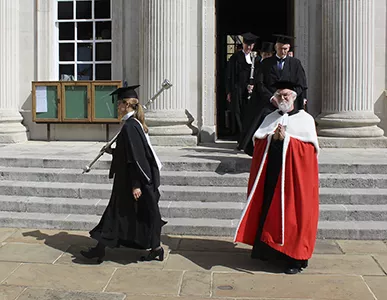
Rowan Williams Cambridge Studentship announced
The Cambridge Trust has established a £0.5 million fund to support students facing barriers to attending Cambridge, including the Rowan Williams Cambridge Studentship for those in need.
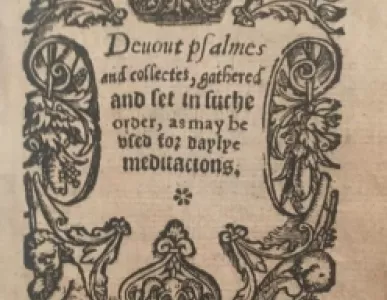
Thomas Britton’s Book Auction
Pepys acquired books from Thomas Britton’s auction, a detail previously unknown. This was revealed by Greg Smith at the British Library, uncovering a new provenance for several works in the Pepys Library.

Seven Rugby Varsity Matches – A University Record!
Magdalene Member Will reflects on his time at the College and his record of playing in seven Varsity rugby matches, highlighting the immense support he received from College throughout his journey.
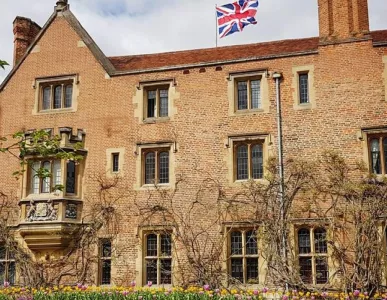
Magdalene Members recognised in the Queen’s Birthday Honours 2018
Magdalene warmly congratulates all Members recognised in the Queen’s Birthday Honours 2018 for their outstanding achievements and contributions across the United Kingdom.
The Seren Network: supporting Wales’ brightest young academics
Cambridge and the Seren Network are working together to support Welsh students. New schemes will extend outreach, raise aspirations, and help more pupils aim for top universities.
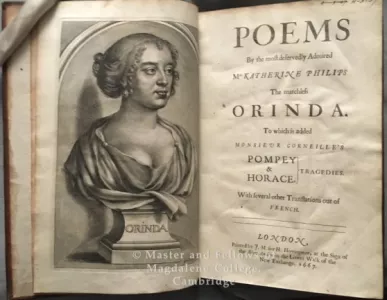
Katherine Philips (1631-1664)
For International Women’s Day, we highlight Katherine Philips, a pioneering 17th-century poet and translator. Known for her work on friendship, she earned recognition, even in Samuel Pepys's time.
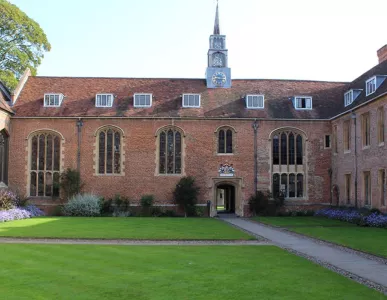
Dr Allègre Hadida wins Pilkington Prize
Magdalene Fellow Dr Allègre Hadida has been awarded the prestigious Pilkington Prize for excellence in teaching and her outstanding contribution to the University’s academic community.
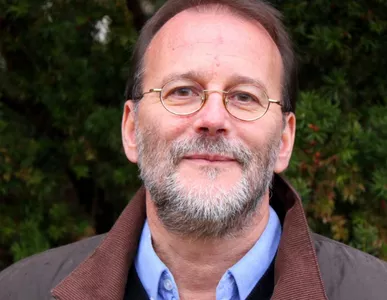
First professor of the Deep History and Archaeology of Africa
Professor Paul Lane has been appointed as the inaugural Jennifer Ward Oppenheimer Professor of the Deep History and Archaeology of Africa.

Stellar Nurseries: Studying the birth of stars and planets
Visiting Fellow Dr Jennifer Wiseman is a senior astrophysicist at NASA Goddard and Senior Project Scientist for the Hubble Space Telescope.
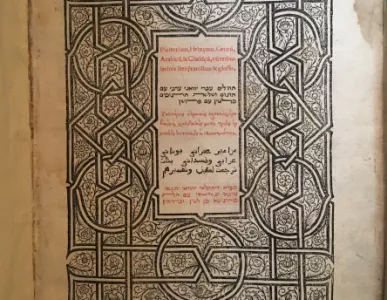
The Genoa Psalter
The Genoa Psalter, the first known polyglot work, features Hebrew, Latin, Greek, Arabic, and other languages. It includes a biography of Christopher Columbus and handwritten inscriptions linking it to notable figures.
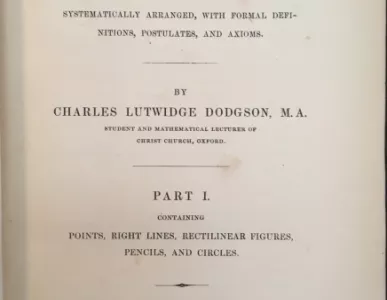
Lewis Carroll
Magdalene’s Old Library now has an online catalogue of 19th and 20th-century mathematical and scientific books, including works by Charles Dodgson, better known as Lewis Carroll.

Magdalene Memories: Antony Grey
This article highlights Antony Grey’s pivotal role in the 1967 Sexual Offences Act, his activism for gay rights, and his contributions to Magdalene College’s library, including donations of his publications.