Alumni
Precision Neuroscience Brain–Computer Interface
A few weeks ago, I was standing in an operating theatre during a brain surgery, watching colored patterns appear on a monitor across the room.
The patient was awake. I couldn’t see behind the plastic surgical veil, but I knew that a tiny part of her skull had been removed, leaving her brain exposed, and a thin yellow device rested on its surface. As she moved her hand and responded to simple prompts, bursts of pixelated activity flickered across the screen.
Those flashing patterns were not abstract graphics. They were electrical signals, the physical traces of thought. Each pulse represented neurons firing in coordinated patterns. For a moment, something that normally feels private and fleeting, even mystical, was visible to everyone in the room.
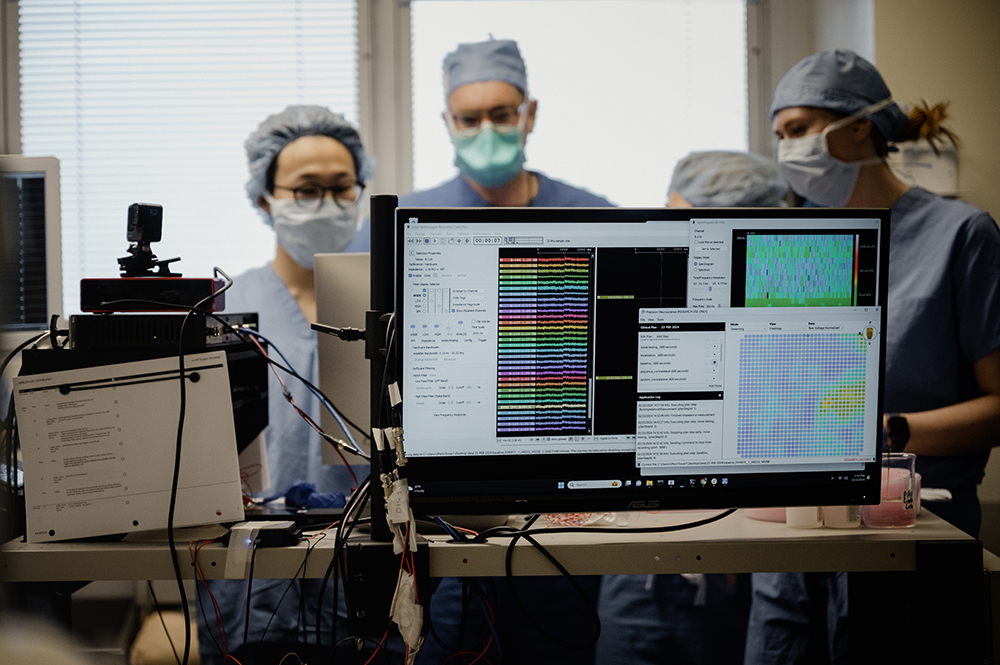
When I was a student at Cambridge, studying economic history, I spent much of my time thinking about how new technologies reshape societies over decades or centuries. I did not imagine that I would one day be watching thought itself rendered as data. Yet that is where my career has taken me: to brain–computer interfaces, and to founding a company called Precision Neuroscience, which is developing a new way to connect with the human brain.
The Intellectual Problem
The brain operates on roughly twenty watts of power, about the same as a light bulb. With that modest energy budget, it produces language, imagination, memory, emotion, and consciousness. Modern data centres consume vast amounts of electricity to approximate jagged forms of artificial intelligence. The human brain achieves general intelligence using almost no power at all.
And yet, despite decades of neuroscience, we still do not understand how it accomplishes this. We can measure electrical activity. We can identify regions associated with movement or speech. But we do not fully understand how a pattern of neural firing becomes a memory, or how an intention is transformed into an action. Still, even partial understanding can be powerful when applied to concrete medical problems.
For people with severe paralysis, from spinal cord injury, ALS, or stroke, the tragedy is not that their brains stop working. Often, their brains function normally. The problem is that the connection between intention and movement has been severed. They know what they want to do: turn a light on or off, text a loved one, share a joke with another person in the room. Their bodies simply cannot execute the command.
For decades, scientists have been trying to bridge that gap. In research laboratories, they have implanted electrodes into the brain and shown that it is possible to record neural signals and use them to move a cursor on a screen or operate a robotic limb. These experiments proved that decoding intention was possible. But they also exposed a central challenge: how to record signals from the brain safely and at high resolution.
My Path to Founding Precision
I never expected to be working on this problem. I studied History and Literature at Harvard and then spent nearly eight years in Hong Kong, working at an investment fund. Later, I came to Magdalene to study economic history. My interests were broad, politics, markets, and technological change, not neuroscience.
That changed when a mutual friend introduced me to Ben Rapoport. Ben is both a neurosurgeon and an electrical engineer, and he grew up thinking about these questions; his father was an electrical engineer who became a neurologist. From early in his career, Ben had been focused on building brain–computer interfaces, and on the question of how to move an experimental technology into mainstream medical practice.
Ben had previously co-founded Neuralink, Elon Musk’s brain–computer interface company, but left over a disagreement about safety and long-term biological impact. At the time, most researchers assumed that achieving a high-bandwidth connection with the brain required inserting penetrating electrodes, essentially arrays of tiny needles, into the cortex. Ben believed there was another way, one that did not require penetrating brain tissue at all.
He needed a partner to help turn that conviction into a company. That is how Precision Neuroscience began. My role was to build the institution around the idea, raising capital, recruiting engineers and clinicians, creating a commercial roadmap, and designing a path from laboratory concept to regulated medical device.
What Makes the Technology Different
At Precision, we developed a surface-conforming cortical array: an ultra-thin, flexible sheet embedded with 1,024 microscopic platinum electrodes. Instead of piercing the brain, it rests gently on its surface, following the natural contours of the cortex.
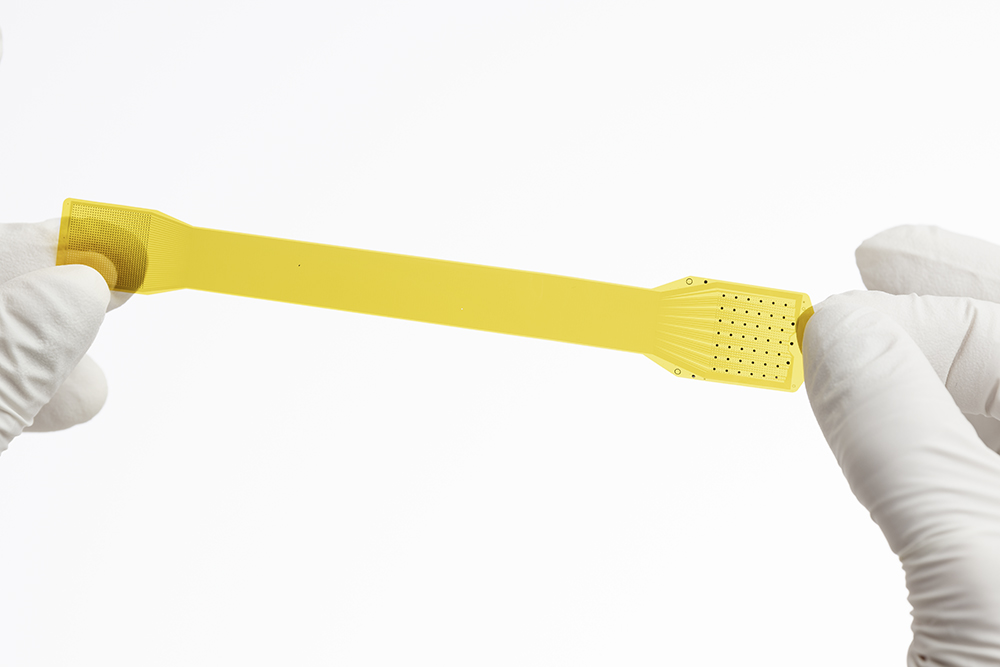
The device is thinner than a human hair. We manufacture it using photolithography, the same technique used to fabricate semiconductor chips, a method not previously applied to an implantable neural interface. This allows us to create a dense grid of electrodes capable of recording electrical activity at high resolution.
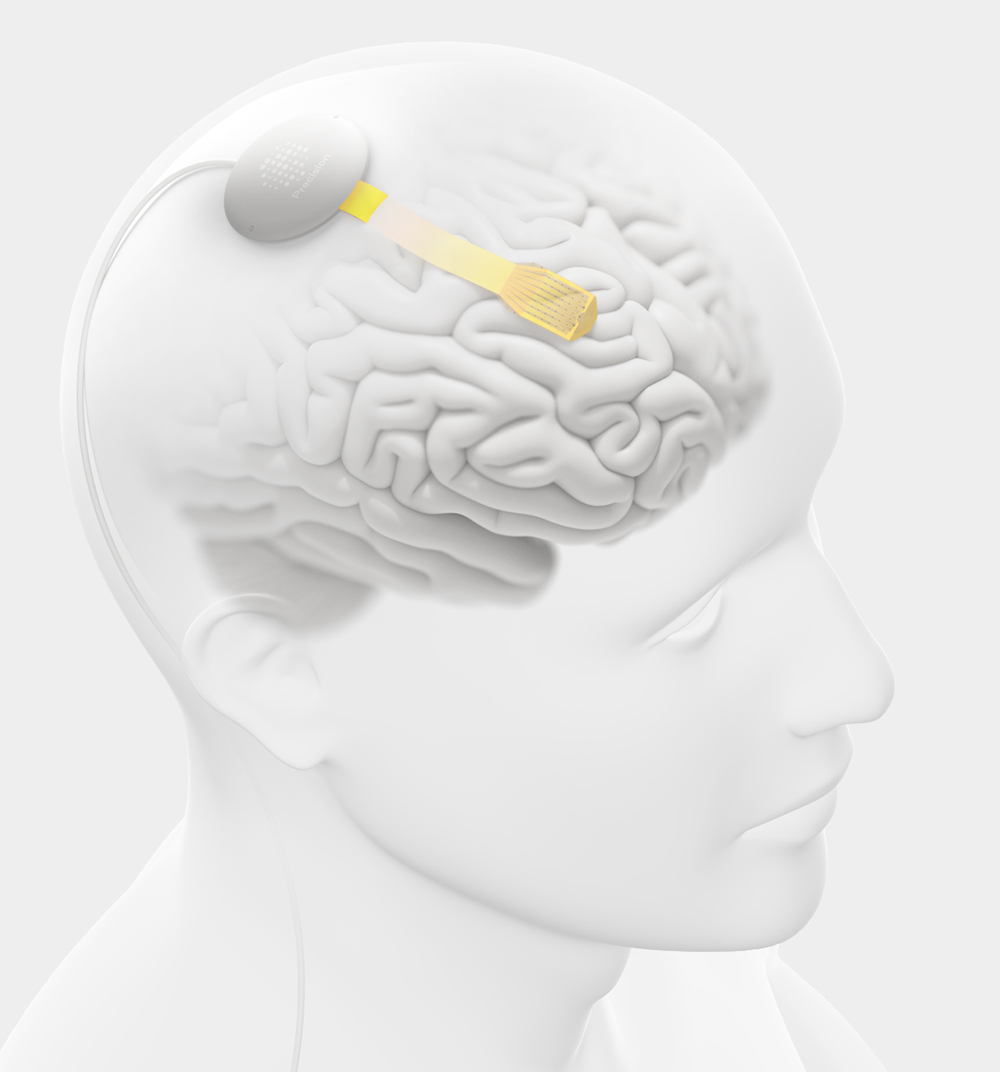
The surgical approach is also different. Rather than removing a large portion of the skull, we create a narrow slit that allows the array to slide into place, more like a letter through a letterbox than a traditional craniotomy. The device sits beneath the skull but on the surface of the brain, avoiding penetration into neural tissue.
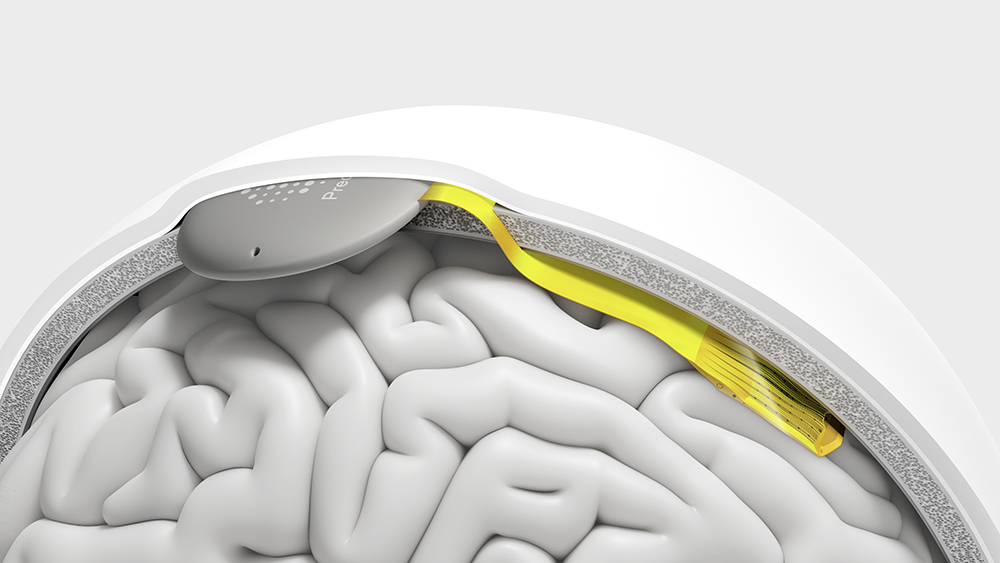
This distinction matters clinically. A system that injures tissue each time it is implanted is difficult to expand safely, whether across larger areas of cortex or across many patients. A surface-based interface, by contrast, can be extended to cover broader regions of the brain, increasing data collection while minimizing harm.
That scalability is important not only for restoring movement to people with paralysis, but for understanding and eventually treating other neurological conditions. Disorders such as depression, epilepsy, Parkinson’s disease, and dementia all involve abnormal patterns of neural activity. A technology that can safely record those patterns at scale may open new avenues for diagnosis and therapy.
Working With Patients
Precision has received FDA clearance for temporary implantation of our device for up to thirty days, and it has been granted Breakthrough Device designation by the U.S. Food and Drug Administration. To date, we have temporarily implanted the system in more than seventy patients.
Our work takes place in partnership with fifteen hospitals across the United States, including Mount Sinai in New York, Johns Hopkins, Penn Medicine in Philadelphia, the University of Chicago, and the University at Buffalo. The device is used during surgeries that patients are already undergoing for example, to remove a tumor or treat epilepsy. With their consent, we place the array on the brain’s surface and record neural activity while the surgical team performs its clinical work. The system is fully removable.
Meeting our clinical study participants has been one of the most meaningful parts of this journey. These are individuals facing serious medical challenges. At an already vulnerable moment, they agree to contribute to research that may not benefit them directly but could help future patients.
There is nothing abstract about developing medical technology in this context. You are reminded immediately that the brain is not a concept but a living organ. That responsibility, standing in an operating room with something that touches a living brain, is what keeps us moving forward so cautiously and deliberately
Cambridge Influence
It is, in some ways, a long way from studying economic history at Magdalene to founding a neurotechnology company. But the connection is not as distant as it might appear.
My time at Cambridge reinforced the habit of asking basic questions about systems: how they evolve, what constraints shape them, and how institutions determine whether ideas endure. Brain–computer interfaces sit at the intersection of engineering, medicine, regulation, and ethics. Turning a scientific concept into a widely used clinical tool requires more than invention. It requires infrastructure, evidence, and patience.
Looking Forward
In the near term, our focus is clear: restoring communication and function to people with severe paralysis. If someone can once again type a message, control a device, or express themselves independently, that is transformative.
But the implications extend beyond paralysis. For the first time, we are beginning to digitize brain activity at scale. Over the past half-century, medicine was transformed by imaging and genomics, by the ability to see inside the body and to sequence its code. The brain has remained comparatively opaque. We diagnose many neurological conditions indirectly, based on symptoms rather than direct measurement.
Standing in that operating theatre, watching neural activity appear in real time, feels a little like stepping onto the deck of a spacecraft. It is exhilarating and profoundly humbling. We are at the early stages of a new scientific frontier, one that may change how we understand disability, neurological disease, and ultimately the organ that makes us who we are.
By Michael Mager (2013), Founder and CEO of Precision Neuroscience
This article was first published in Magdalene Matters Issue 56.