Study English at Cambridge
English
If you have a passion for literature, we have a challenging course that will inspire you in your reading, and help you develop your critical and imaginative abilities.
English at Cambridge balances a strong grounding in the core of English literature with the chance to explore literature from around the world, other art forms, the English language, and related intellectual traditions.
Course Details
MAGDALENE CAMPUS CODE:
M
MINIMUM OFFER LEVEL
A-level: A*AA, IB: 41-42 points
UCAS CODE:
Q300
ESSENTIAL SUBJECTS:
English
COURSE DURATION:
Three years – BA (Hons)
USEFUL SUBJECTS:
Languages, Humanities
At Magdalene
Magdalene is the first home of English Studies in its modern form: the subject’s twentieth-century founder, I. A. Richards, devised his pioneering method of Practical Criticism while he was at the College, and our Fellows and Honorary Fellows have included some of the most distinguished critics and poets in the English-speaking world (scroll down to read more about this extraordinary history). Building on these rich foundations, we embrace the full range of the subject’s contemporary reach and methodological diversity, whether you are interested in the latest critical or artistic experiments or the workings of medieval texts.
Our facilities help us in covering this range. We are home to the Stirling-Prize winning New Library, an inspiring place to work that also includes the Robert Cripps Gallery, a venue for termly art exhibitions. And the College has rich archival collections, ranging from modern poetry holdings in the Old Library (including books owned by T. S. Eliot and Thomas Hardy manuscripts) to the renowned collection of books and medieval manuscripts held in the Pepys Library, and the records kept in the College Archives. Our students are encouraged to make use of these rich resources, and where possible we include them in our teaching.
The running theme across our teaching is that we place a high value on the close reading of texts. Alongside your period papers and options, you will follow a programme of work in what we call Practical Criticism, which is examined separately on both Part I and Part II of the English Tripos. Mastering this technique will build your confidence in handling not just novels, poetry, drama, and non-fiction prose, but all kinds of writing – whether encountered during your degree, or many years into your future. Practical Criticism sets Cambridge graduates apart: we like to think of it as our disciplinary superpower. No matter the career you embark on you will find great benefit in your strengthened confidence with written language, notably through the functions of discussion, debate and chairing that many of our graduates call upon every day.
Attentive reading is closely linked to writing, and you will find that we take your writing very seriously. In the age of Generative AI, our graduates need to retain the ability to write from scratch unassisted, not only because of practical and professional benefits, but because it is a humane practice and a craft worth pursuing. Writing is hard – T. S. Eliot aptly refers to ‘the intolerable wrestle with words and meanings’ (Four Quartets) – but getting better at it is hugely satisfying and infinitely worthwhile. We are fully committed to helping you achieve precise and confident self-expression.
We are also committed to building a friendly and supportive scholarly community where everyone can find their place. We don’t believe there is a ‘typical’ student, and we look for talent in people of all backgrounds. The focus is on how you can develop and reach your potential while you are here, taking into account your own needs and ambitions. We will encourage you to excel, and you can expect to work very hard while you are here; but we don’t think of ourselves as a hothouse, and we tend to privilege a humane understanding of education as growth and exchange, valued for its own sake, rather than focusing on instrumental outcomes.
The happy effect of small-group teaching (typically groups of 2, but varying depending on the task) is that you will learn quickly, and that through weekly dialogue we will also learn from you. This level of attention is a distinguishing feature of our approach to teaching at Cambridge, and we are proud to be able to offer it at Magdalene.
You will also learn from each other. Our average year group is c. 5 students, which means you will be part of an intimate intellectual and social community, one that can expand as you wish to include the wider community of English students in the College (c. 15 undergraduates) or the Faculty at large (c. 190 undergraduates per year group) (where you will attend lectures, and seminars linked to particular papers), and beyond that to your peers studying other subjects across Cambridge.
Out History
English students at Magdalene belong to a College with an illustrious history in their subject. As the College’s first Fellow in English, and author of Practical Criticism (1929), I. A. Richards arguably founded the discipline in its modern form. After a long period teaching at Harvard, he returned to Magdalene and lived here until his death in 1979. One of Richards’ early students at Magdalene was the poet and critic Sir William Empson, who wrote Seven Types of Ambiguity (1930) – another of the discipline’s foundational books. C. S. Lewis became a Fellow of the College after moving from Oxford in 1954 to become the University’s first Chair of Medieval and Renaissance English. More recently, the distinguished American literary critic Professor Helen Vendler was an Honorary Fellow – you will find her portrait hanging in the Hall.
The College also has a virtually unrivalled tradition in poetry: Thomas Hardy, Rudyard Kipling, T. S. Eliot, Seamus Heaney and Les Murray were all members of Magdalene; three of them were also recipients of the Nobel Prize for Literature. The current Honorary Fellowship includes the former Poet Laureate, Dame Carol Ann Duffy, and the Rt Rev. and the Rt Hon. the Lord Rowan Williams of Oystermouth – a published poet as well as former Archbishop of Canterbury and Master of the College.
In the broader artistic sphere, our Honorary Fellowship includes the sculptor Rachel Whiteread, and the artist Sir Grayson Perry, both of them winners of the Turner Prize. We are also known as a home to diaries and diarists: Samuel Pepys was a student here, and the library of books and manuscripts he left to the College, along with his famous diary, is one of our great treasures; and the Edwardian man of letters, A. C. Benson, wrote a diary while he was Master that is notable for its close and cantankerous observations on Cambridge life.
Our English Fellows
One of the great advantages of studying at Cambridge is that you will get to know the people teaching you, not only through formal supervision, but also at meals and receptions laid on across the year to mark and celebrate turning points in your studies. Your closest point of contact will be your Director of Studies, who organises your programme of teaching – some of this teaching will be provided internally, some of it will be undertaken by subject specialists from across the University (as is normal in the Cambridge system).
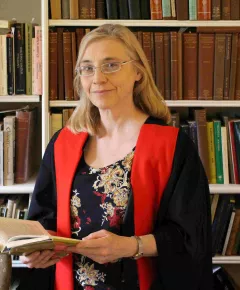
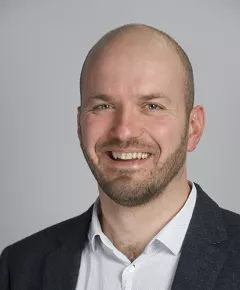
The College’s team of working English Fellows includes Dr Rachel Bryan (Director of Studies for Part I and Part II), who specialises in nineteenth- and twentieth-century literature; and Professor Marcus Waithe, who is Professor of Literature and the Applied Arts (specialising in nineteenth- and twentieth-century literature).
Our Emeritus Fellows include two specialists in medieval literature, Dr M. E. J. Hughes (former Director of Studies), who is the Pepys Librarian; and Professor Helen Cooper, who is a Life Fellow and emeritus Professor of Medieval and Renaissance Literature. Also a Life Fellow, the historian Professor James Raven works on the History of the Book.
Magdalene English is additionally enriched by the expertise of our Research Fellows. Fellows in this category currently include Dr Michelle Taylor, who is the Armstrong T.S. Eliot Research Fellow, and a specialist in Modernist Literature; and Dr Elisa Cozzi, who is the Junior Research Fellow in Irish Studies (in partnership with the Keough-Naughton Institute, Notre Dame University) and a specialist in Romantic literature. We are also fortunate that several past holders of the annual Parnell Fellowship in Irish Studies have been scholars active in the field of English Studies.
Students requiring extra help with writing are able to draw on specialist advice from our Royal Literary Fund Fellow. Recent holders of this post include the poet and writer Professor Ruth Padel, the author Dr Vital Vitaliev and the journalist James Woodall.
Careers
You may be surprised by the sheer range of career options available to English graduates, especially when aided by the resources of the University’s Careers Service. Employers value English as a capacious subject that teaches skills in writing, argumentation and research (including synthesis of disparate sources), as well as broad subject knowledge and conceptual agility.
While many of our graduates pursue careers in teaching or research, this is by no means the limit. Our graduates have also forged successful careers in journalism, authorship, law (after a conversion course), finance, museums, libraries, the Civil Service, diplomacy, University administration, and many other areas. Recent discussion of advances in AI has drawn attention to the value of the humanities in fostering high-level critical skills applicable across an even broader domain. For instance, two co-founders of the AI company Anthropic, Daniela Amodei and Jack Clark, studied English and have advocated for its applications within the AI industry.
Our former English students represent this range of professional possibility and exceed it – among them, the garden writer and broadcaster Monty Don OBE , the BBC World Affairs Editor John Simpson CBE, and the writer and expert on Chinese cuisine Fuchsia Dunlop, all three of whom are Honorary Fellows. If you are looking for a subject that will give you a rigorous and broad intellectual training without narrowing your options, then English may be the course for you.
At Cambridge
More details of the course and the optional papers available can be found on the University’s Undergraduate Study pages and the Faculty of English website.
What we are looking for
We are looking for applicants who combine a strong personal interest in reading literature and literary criticism with an inclination towards thinking about these sources critically and analytically.
While we encourage you to develop existing interests, we also like you to be open to new things – one of the wonderful things about studying literature across its full chronological range is that you learn to love texts and genres that you previously knew nothing about. Studying English at university is about breaking out of the narrow tracks we often travel along.
All of this is to say that we place a particular value on intellectual curiosity, and a willingness to pursue learning for its own sake. This might include persisting with things that you initially find hard or less appealing, or reading widely beyond literature to include related subjects such as history, philosophy, political thought, theology, languages, and so on.
One of the attractive aspects of Cambridge life is the opportunity to develop new hobbies and interests outside the formal curriculum. We encourage this in our students, but please note that when it comes to assessing applications, we are interested in your academic potential and enthusiasm for the subject – not the number or variety of your extracurricular activities!
Subject requirements
To apply for English at Cambridge, you will need to be studying English Literature at A-level, IB Higher Level, or equivalent. English Literature and Language is also acceptable at Magdalene (for example, if English Literature is not available at your school). Beyond that, there are no other specific subject requirements, and a wide range of combinations will be acceptable, including a mixture of arts and science subjects.
Minimum offer
A-level: A*AA
IB: 41-42 points overall, with 7, 7, 6 at Higher Level.
Sometimes we may ask for an A* (or 7 at IB Higher Level) in English Literature specifically.
Other qualifications: Check which other qualifications we accept
Interviews, Written Work and Assessment
Candidates will normally have two interviews lasting a total of 35-50 minutes across both. Typically, one or more of these interviews will include discussion of some short passages that you will have been given shortly before the interview itself, with reading time set aside. We may also talk to you about your submitted written work, your Personal Statement, texts you’ve been studying at school, and your wider reading.
The interview process aims to assess your intellectual ability, potential, and commitment to the subject.
We also usually ask for two samples of marked written work (such as school essays) to be submitted with the application. It is best, if possible, for these to be work written as part of your study of English.
There is no admissions assessment for English.
More information is available on the Interviews, Written Work and Assessments page.